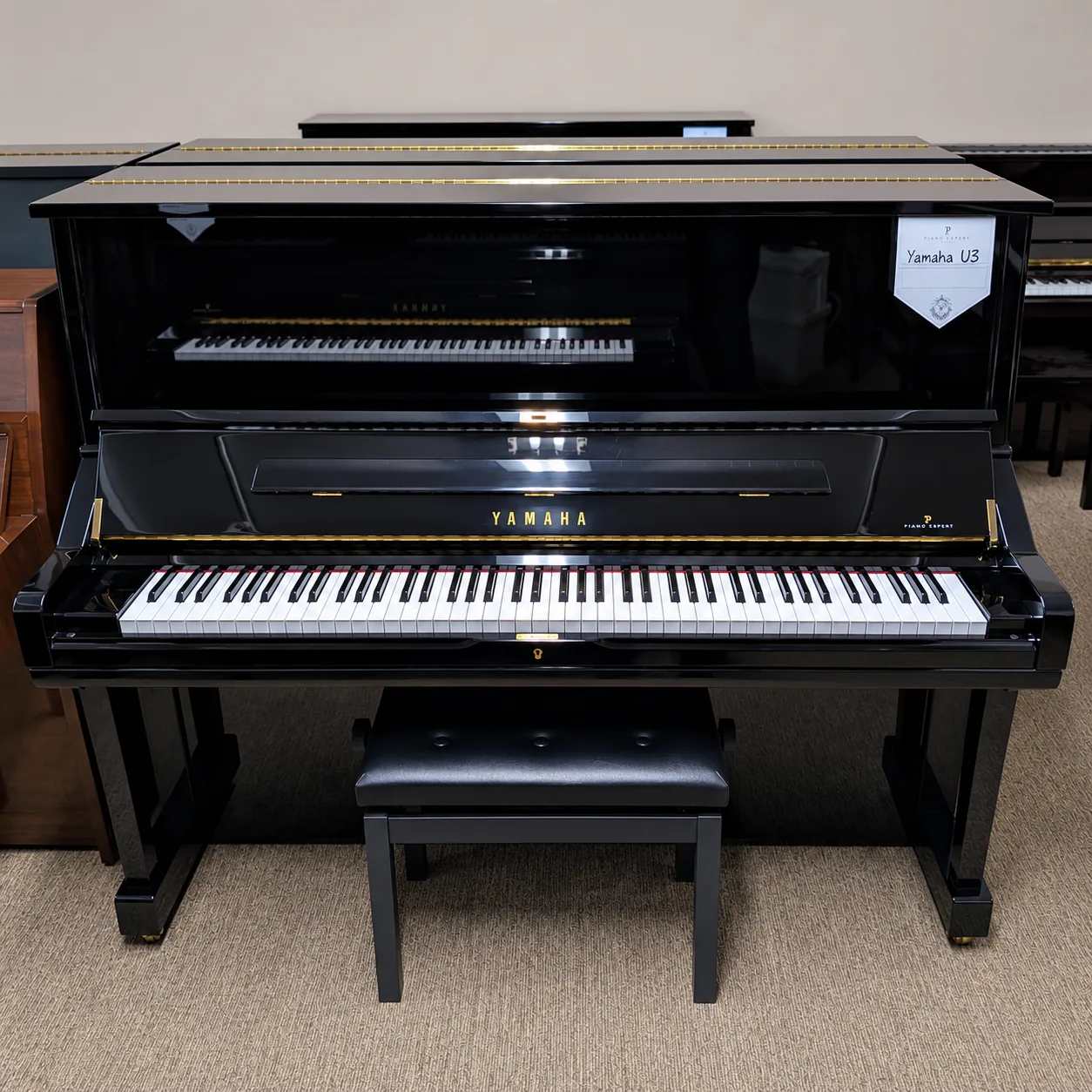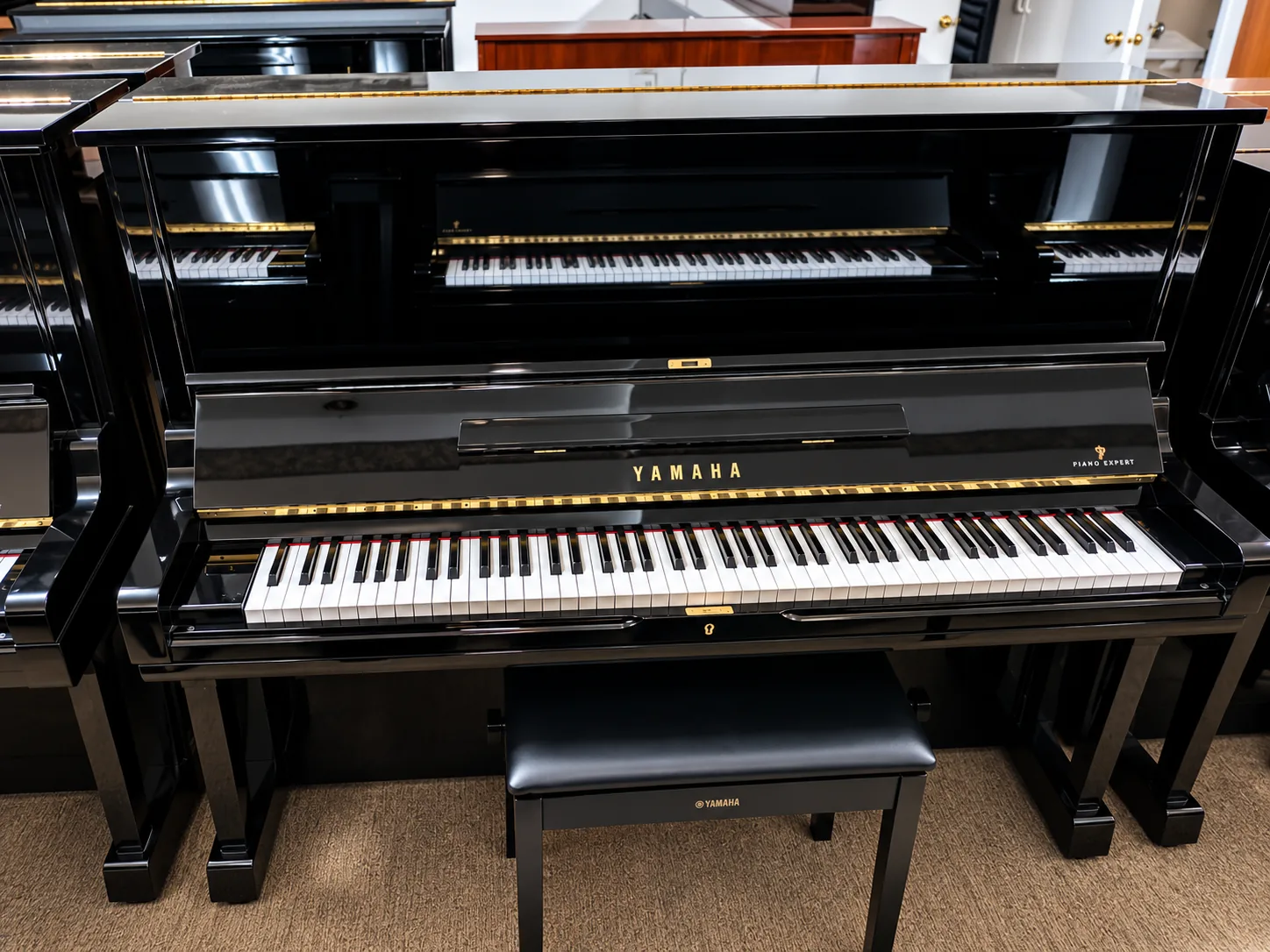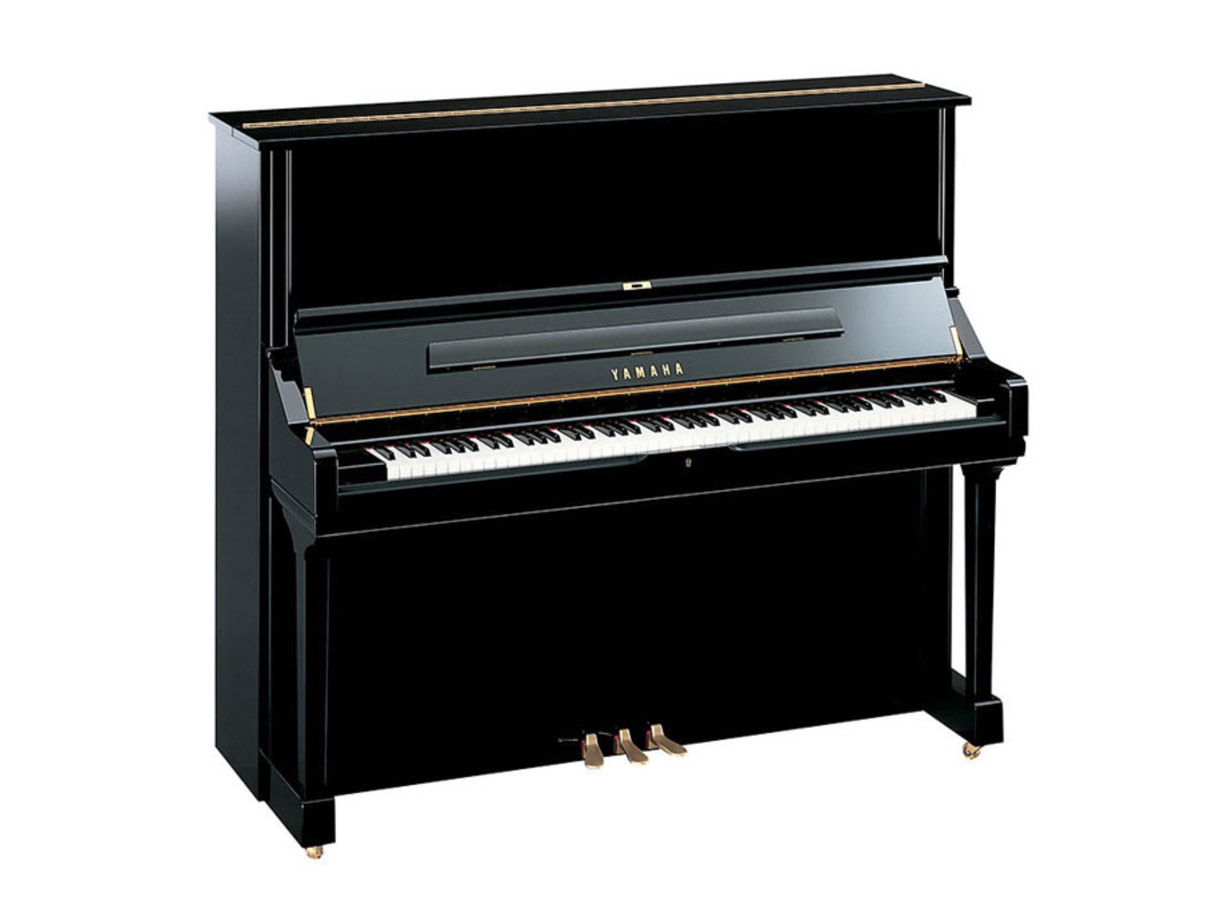
The Yamaha U3 and Yamaha UX3 share an important feature: both are large uprights, approximately 131 cm tall. However, the UX3 should not simply be described as a U3 with another letter. Its design includes particular features worth understanding and trying.
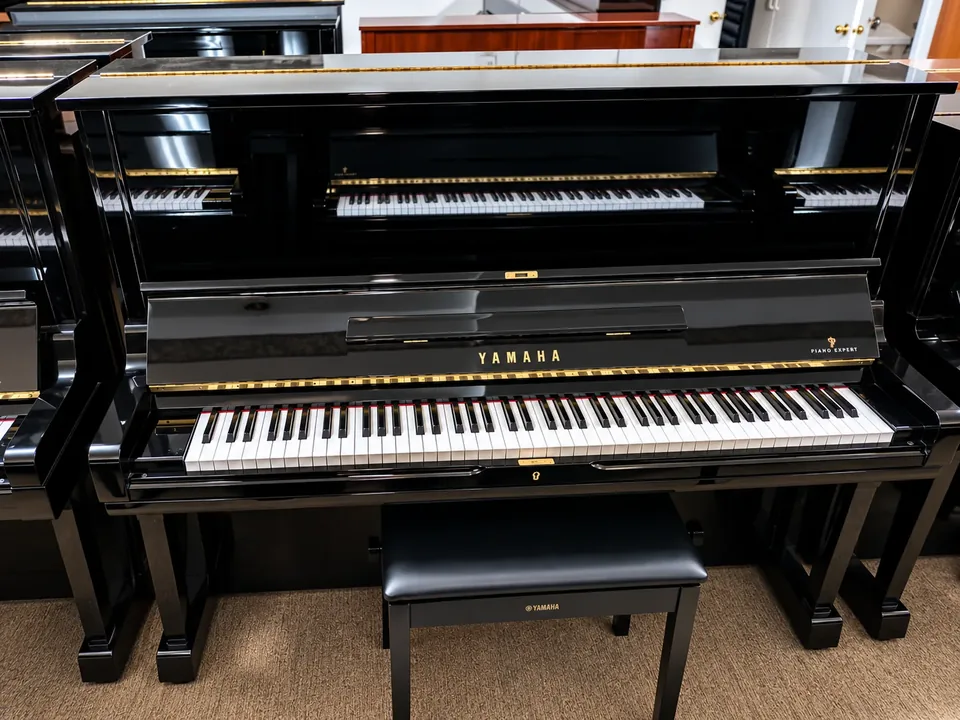
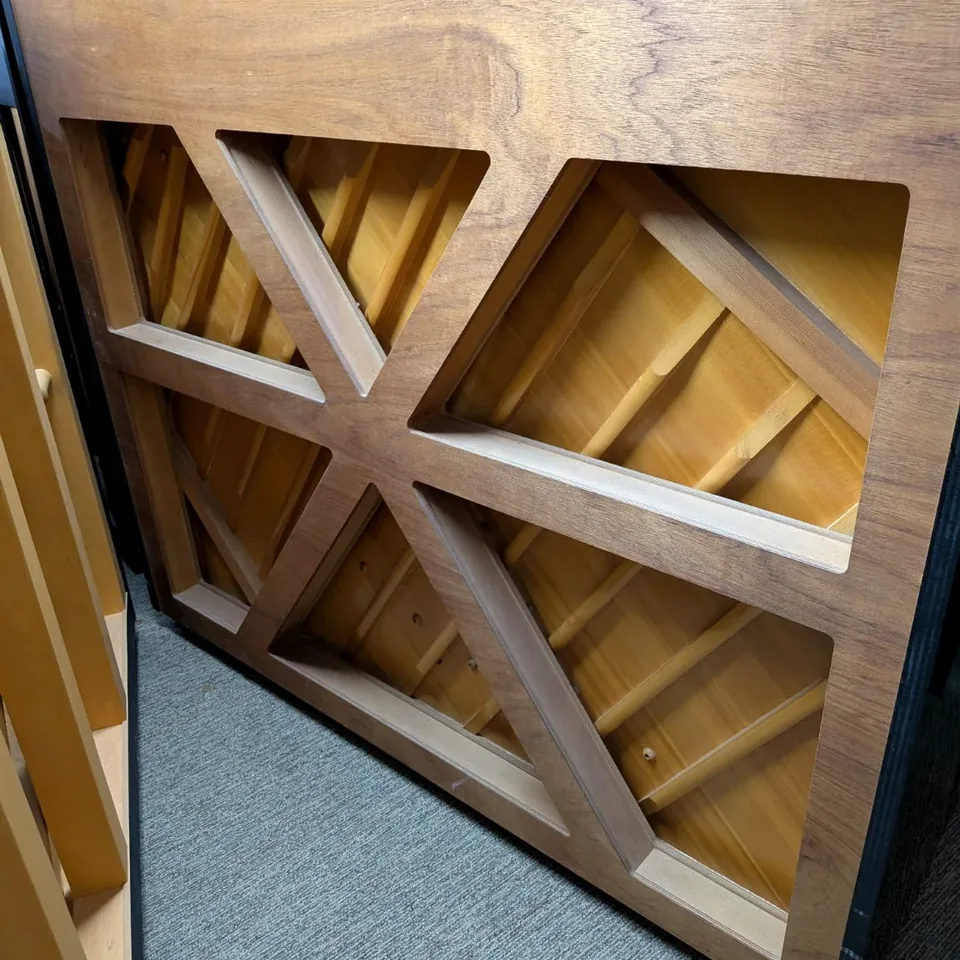
A different back structure
The UX3 is identifiable by its X-shaped back posts. They are a structural feature of the UX series: a concrete design element rather than a decorative difference.
Those posts alone do not establish that a used UX3 will be better than a U3. Each instrument’s condition, preparation and your preferences remain essential. A technical feature helps you compare; it does not replace listening.
The Tone Escape system
The UX3 also has front sound openings associated with its Tone Escape system. They allow sound to reach the person at the keyboard more directly. When trying the piano, notice what you hear while playing softly and as you increase intensity.
The goal is not simply to find a louder piano. It is to discover whether this way of hearing the sound helps you appreciate dynamics and feel comfortable in your playing.
Comparing different generations
The UX3 belongs to a historical range: do not assume it has the equipment of a current Yamaha without checking. The U3, meanwhile, spans several generations. A recent U3 and an older UX3 therefore cannot be compared by model name alone.
Try the same passages and check the ease of quiet playing, repeated-note response and consistency of touch across registers. If you are looking for a large Yamaha upright, both models are worth considering.
Explore the Yamaha U3 and UX3 pianos available at Piano Expert and book a visit to our Lévis showroom to discover them, subject to arrivals.