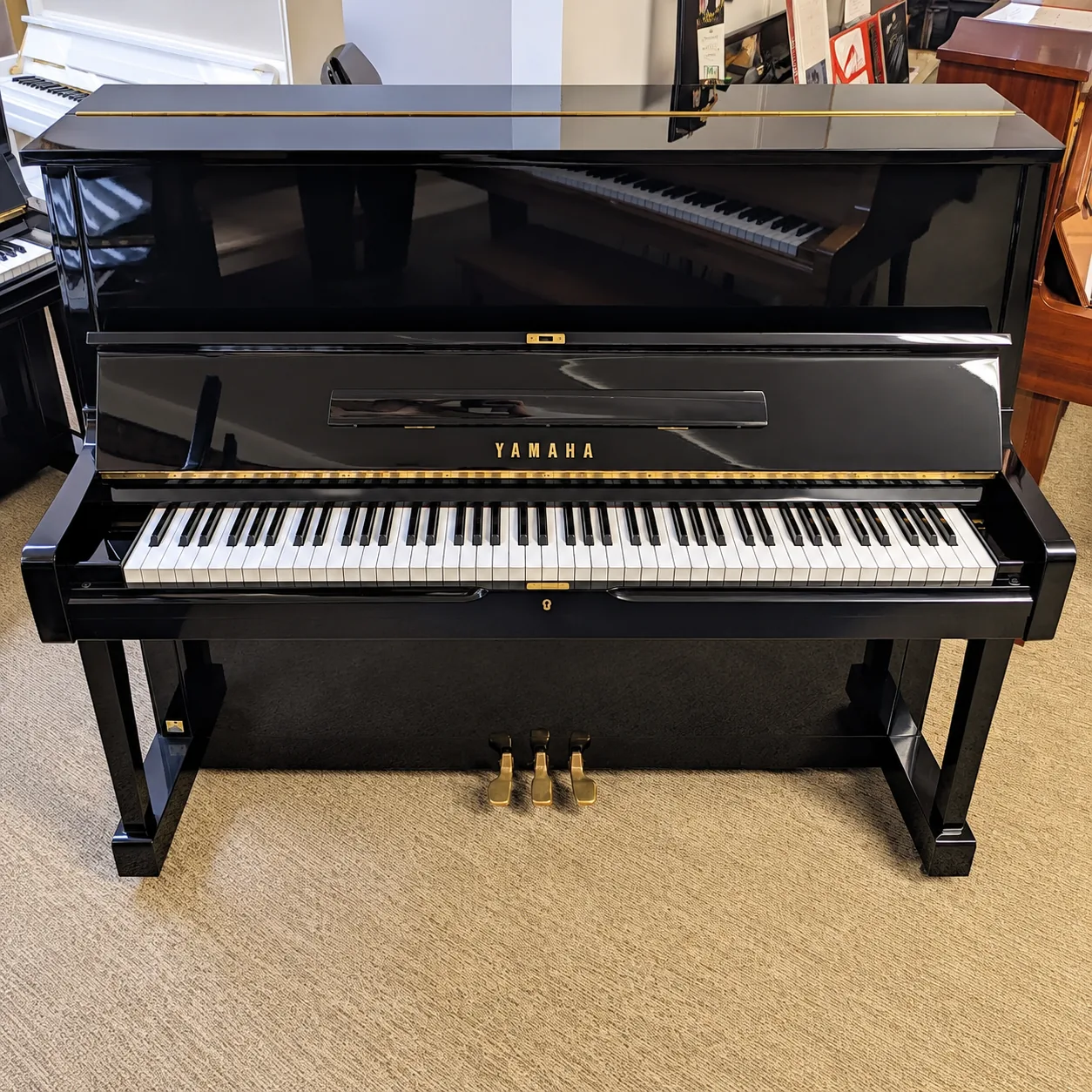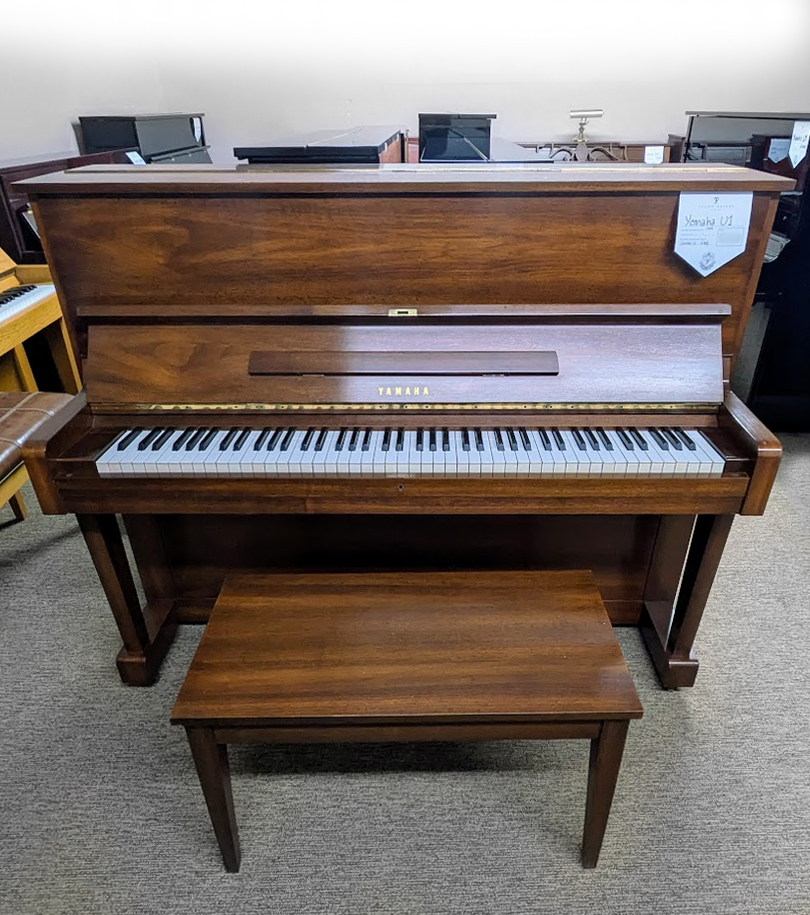
The letters and numbers following the Yamaha name can make a used-piano search confusing. U1H, U1M and U1A identify generations of the U1. U100 is another model in Yamaha’s family of uprights of this size. These names help place an instrument in context; they are not a ranking of its condition.
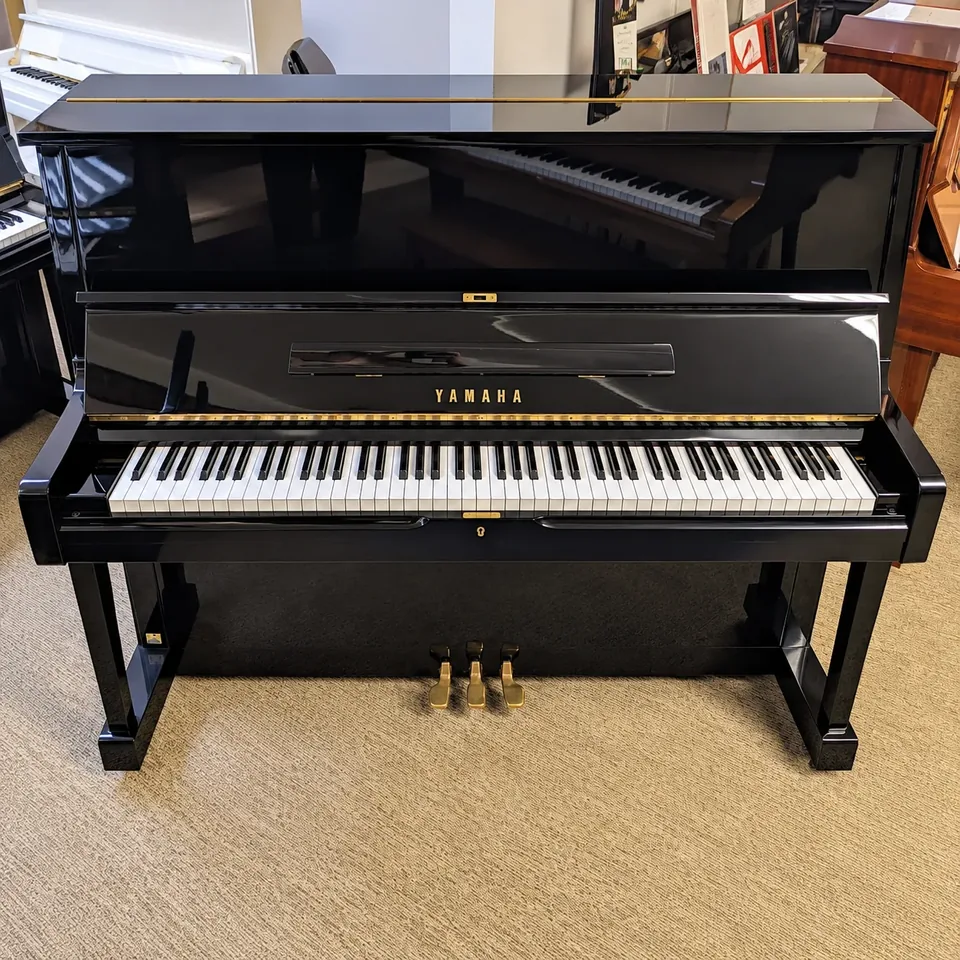
Identifiable generations
Yamaha’s Japanese-market archives give these production periods for generations commonly found used: U1H, May 1972 to September 1980; U1M, September 1980 to December 1982; U1A, December 1982 to March 1987; U100, March 1994 to August 1997.
These dates are production reference points, not a way to date an individual piano precisely from its name alone. A name can also appear in a different historical period: Yamaha’s archives include an earlier U1A in the 1950s. The serial number remains essential to identify the instrument.
What about the U10BL and U10A?
These model names appear between the 1980s U1A generation and the 1990s U100 in the Japanese archives. They can broaden your selection when shopping for a Yamaha upright in the same spirit as the U1.
Used-piano specialists describe the U100 as a close relative of the U1. It deserves to be compared at the keyboard rather than dismissed because its name is less familiar. However, do not assume all these models have identical equipment or the specifications of today’s new U1.
Choose the instrument, not just its model name
Start by identifying the exact model and serial number. Then compare condition, maintenance history and response. Avoid automatically choosing the newest one or a letter presented as superior: comfort at the keyboard and technical assessment matter more than an advertisement’s shorthand.
Unsure about several model names? Explore our available Yamaha pianos and tell us which interest you. A trial in Lévis lets you compare the actual instruments on offer, subject to arrivals.