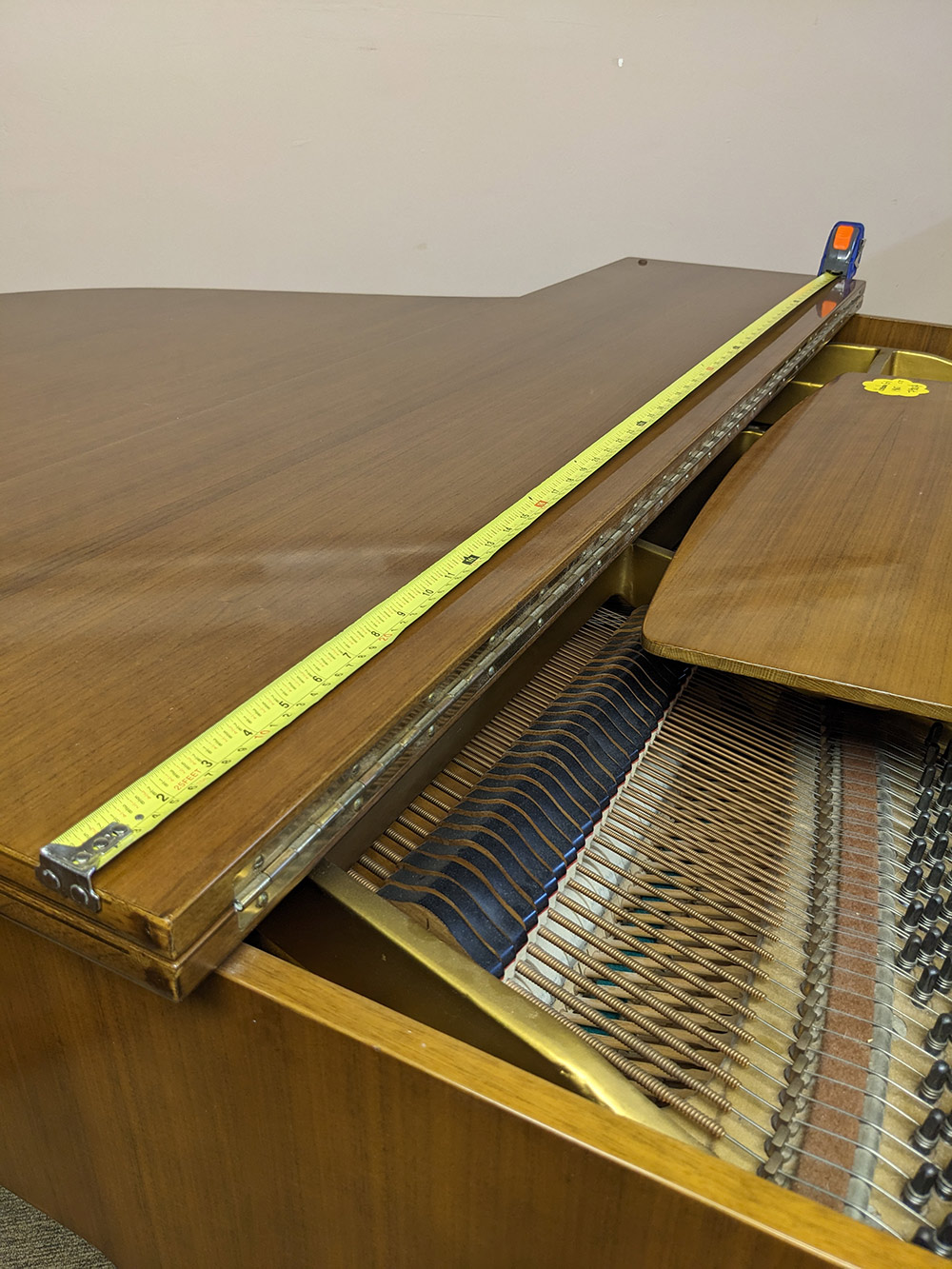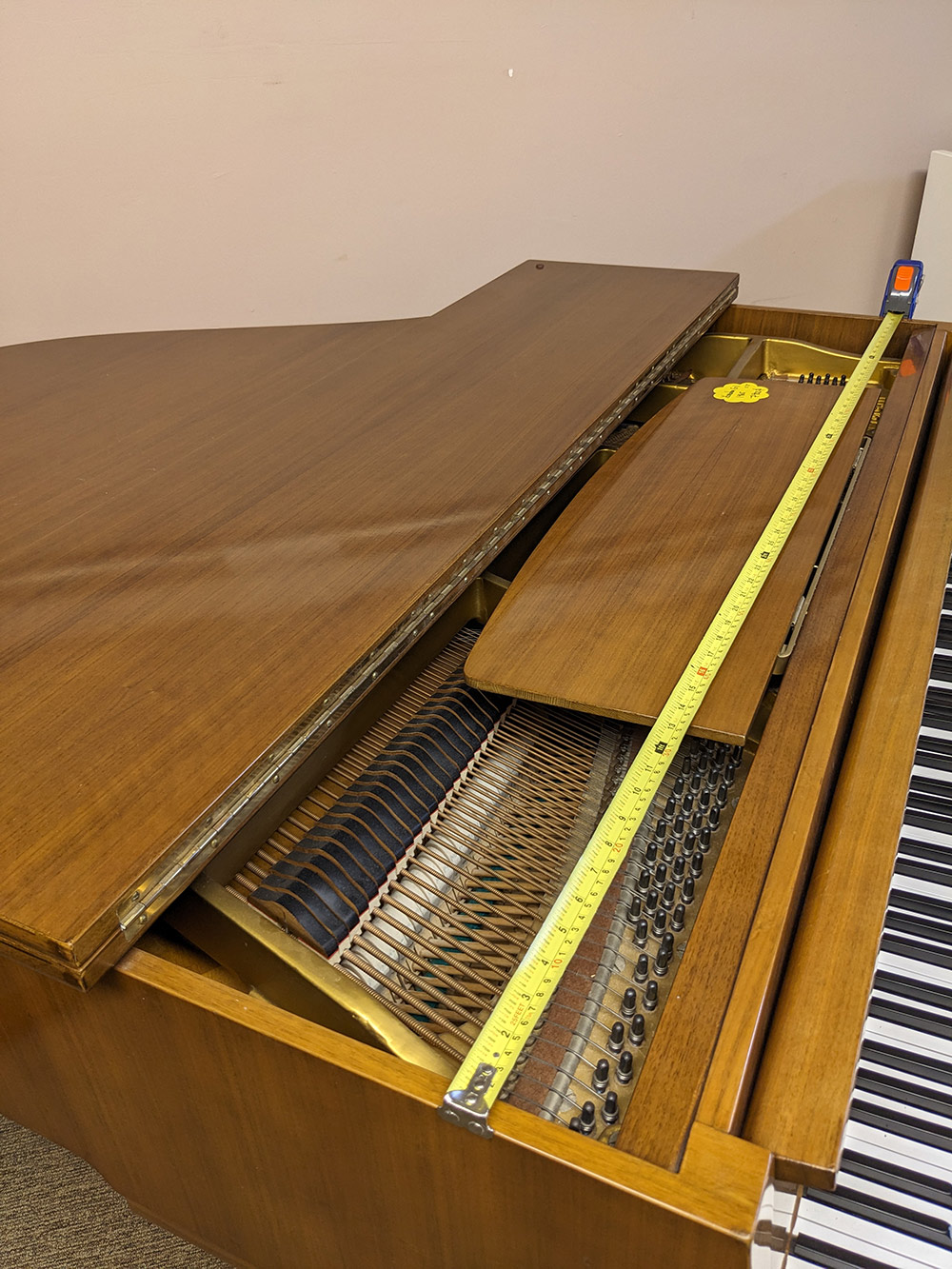
Measuring your piano
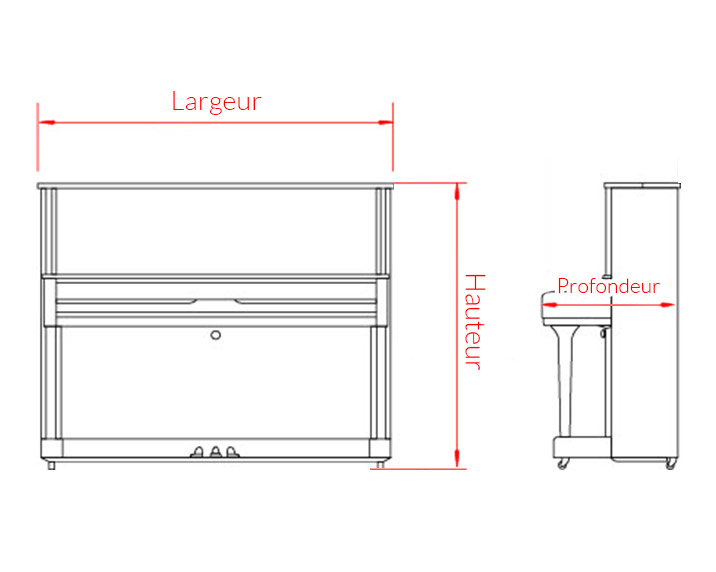
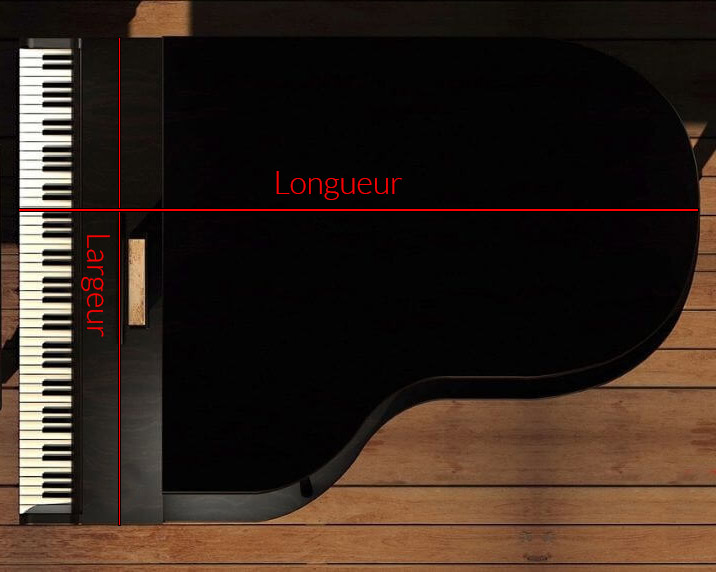
Please take precise measurements to ensure that, along the route the piano will take, the width of any doors or stairwells is a few inches wider than the depth of an upright piano or the thickness of a grand piano, in order to allow enough clearance for the piano and for the hands and arms of the people moving it.
If there is a ceiling, floor, or balcony above or very close to your stairs, it is very important to take precise measurements to ensure that the piano will fit.
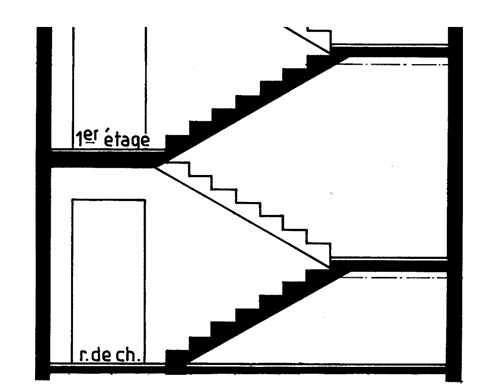
How to measure for steps
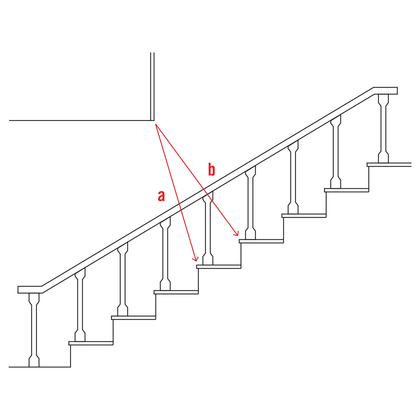
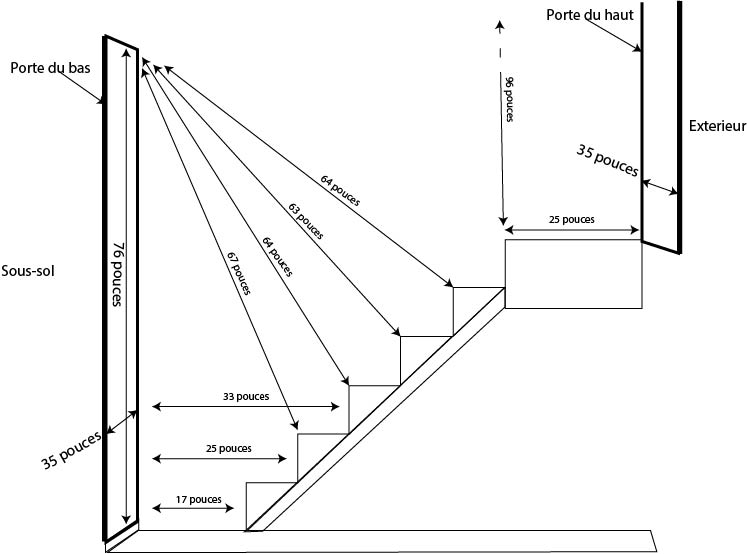
Measure the front edge of a few steps (the nosing) that are at an angle to the front edge of the obstacle above the spot where the piano will pass through the greenhouse.
Compare measurements and select the smallest.
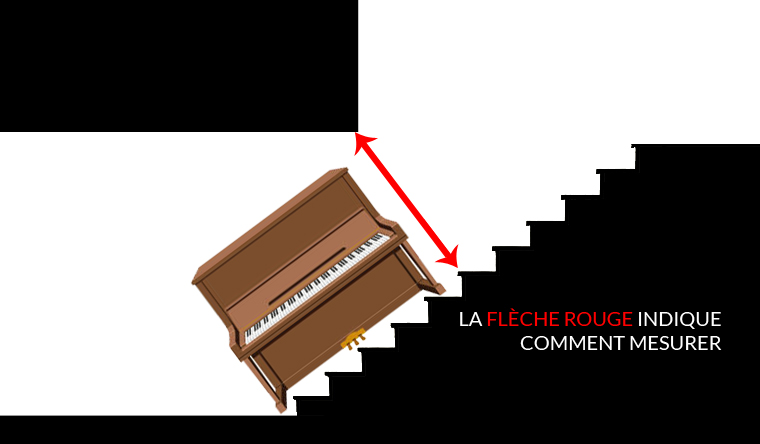
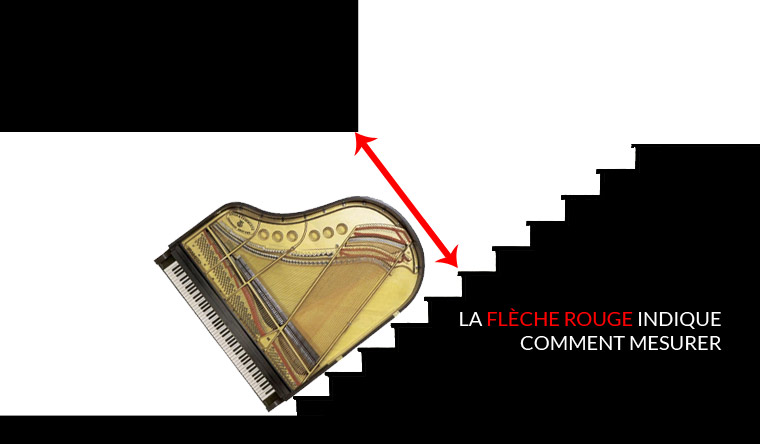
The space between the front edge of a step and the top of a ceiling is called the “clearance.”
The smallest escapement measurement should ideally be 6 inches higher than the height of the upright or the width of the grand piano, so that the piano doesn't hit the ceiling.
Sometimes, even in a spot where a person could easily walk through, the piano won't fit because it needs to be able to pass by resting against the edge of the steps.
DISASSEMBLY / REASSEMBLY
Whenever possible, instead of disassembling equipment to reduce weight, we bring in a fourth or fifth person to help.
The surcharge depends on the time and number of people required.
We do everything we can to avoid having to disassemble and reassemble equipment.
UPRIGHT PIANO
When transporting a large upright piano up a staircase (which is rarely the case with a small upright piano), we may need to disassemble certain parts of the piano (and reassemble them) because it won’t fit through or turn, or to reduce its weight.
When disassembling and reassembling a piano, there is always a risk that its sound quality will be compromised.
We have the experience and the skilled workforce to do it.
Please note that this is not possible with a piano that has a lacquer finish or with a roller piano.
In addition to standard measurements, please also take these measurements:
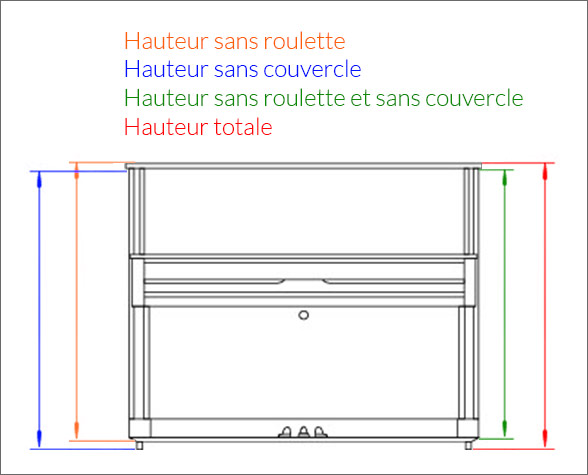
For an upright piano, measure three pitches:
- height with castors
- height without castors
- height without wheels and lid
GRAND PIANO
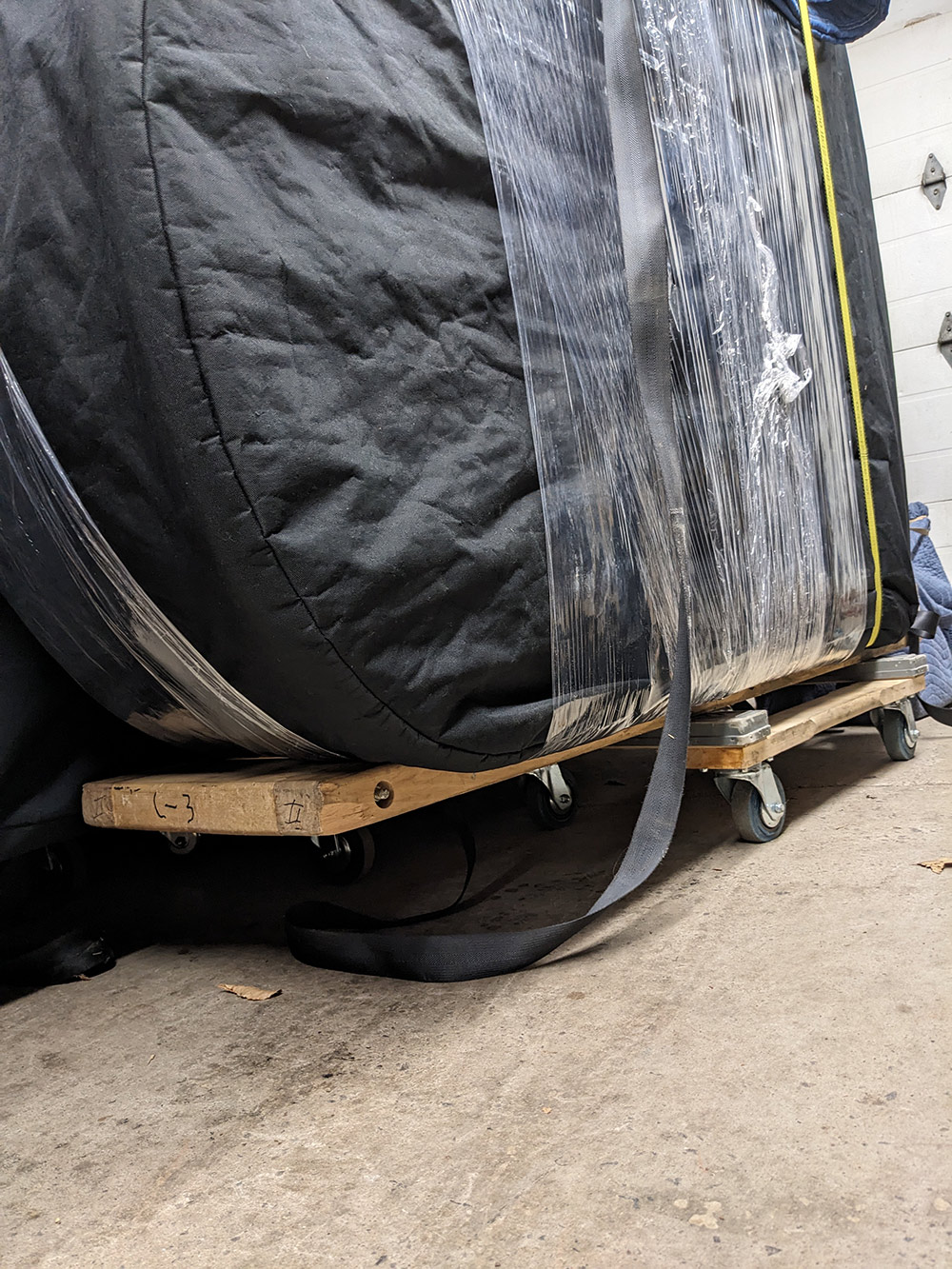
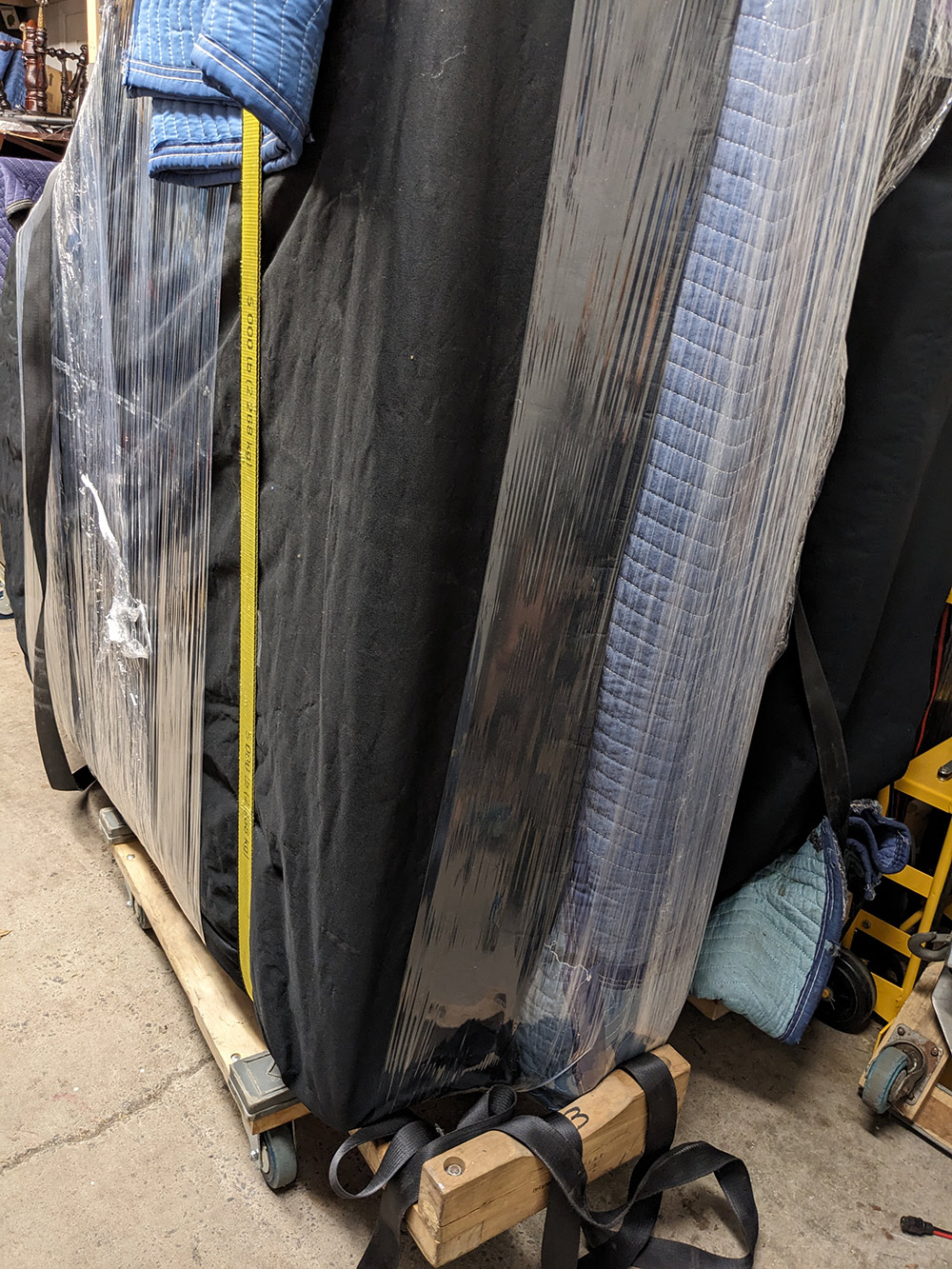
Please note that we use a piano skid to transport a grand piano on level ground, as well as to carry it up or down stairs.
If we need to remove the skid used to transport the piano and/or the cover due to a lack of space in height or length (the skid adds a few inches to the piano's length and height for added protection), there will be an additional charge.
If we need to lift it at an angle or completely vertically—for example, in an elevator or at the top or bottom of a staircase due to lack of clearance—there will be an additional charge for the extra personnel required and, in some cases, for removing and reinstalling the lid, the action, the keyboard, and the piano’s front panel.
At this point, the piano is without the protection of the skid, so we compensate with blankets.
In addition to standard measurements, please also take these measurements:
For a grand piano, measure two widths:
- the widest width including the lid
- the same place, but without the lid